ALL Solutions


February 24, 2026
AI Forecasting in Healthcare Supply Chains:
Why Most Pilots Fail and Where ROI Actually Exists
Artificial intelligence has become one of the most talked-about tools in healthcare supply chains. Forecasting demand, predicting shortages, optimizing inventory, automating decisions—on paper, AI promises to solve problems that have frustrated supply leaders for decades.
Yet despite years of pilots, proofs of concept, and vendor demos, most healthcare organizations struggle to show real return on investment.
At SupplyCopia, we see the same pattern repeatedly: AI forecasting doesn’t fail because the algorithms are weak. It fails because the surrounding decision system is incomplete.
Why AI Pilots Rarely Scale in Healthcare
Industry research consistently shows that the majority of AI initiatives never move beyond pilot phase. Analyses of large enterprise AI programs indicate that more than half fail to deliver measurable business impact, and healthcare is no exception.
The reasons are surprisingly consistent.
1. AI Is Deployed Without a Decision Context
Many AI pilots focus on generating predictions—forecast numbers, risk scores, demand curves—but stop there. They are not embedded into how procurement, inventory, or finance decisions are actually made.
A forecast that does not change ordering behavior, sourcing strategy, or inventory policy does not create ROI. It creates dashboards.
Healthcare supply chains are especially vulnerable to this gap because decisions are distributed across pharmacy, supply chain, finance, and clinical teams. Without a shared decision layer, AI outputs remain isolated.
2. Data Is Fragmented Across Systems
AI forecasting depends on data quality and consistency. In healthcare, supply data is often spread across:
- ERP systems
- Inventory systems
- Contract data
- Clinical utilization data
- Supplier performance records
When these data sources are not reconciled, AI models inherit the inconsistency. Forecasts appear precise but are built on partial or misaligned inputs.
This is one of the most common failure modes we observe: advanced AI sitting on top of unreliable foundations.
3. Pilots Are Designed for Technology Validation, Not Financial Impact
Many pilots are evaluated based on model accuracy rather than business outcomes. A 10% improvement in forecast accuracy sounds impressive, but if it does not reduce stockouts, expirations, or emergency purchases, the value remains theoretical.
Healthcare leaders ultimately care about:
- Margin protection
- Availability of critical supplies
- Reduction in waste
- Labor efficiency
AI that cannot tie directly to these outcomes struggles to earn long-term sponsorship.
Where AI Forecasting Actually Delivers ROI
Despite these challenges, AI forecasting does work—when it is deployed correctly.
Real ROI appears when AI is used not as a prediction engine, but as a decision support system.
At SupplyCopia, we see successful AI use cases cluster around three principles:
1. Forecasting Is Connected to Action
AI becomes valuable when forecasts trigger specific, measurable actions:
- Adjusting reorder points
- Rebalancing inventory across locations
- Identifying supplier risk early
- Modeling sourcing alternatives before disruption
This requires more than analytics. It requires orchestration.
The Hybrid Control Tower serves this role by connecting forecasting insights directly to operational and financial decisions across the supply chain. Instead of static outputs, teams see what a forecast means and what actions are available.
2. AI Operates on Unified, Trusted Data
Successful forecasting depends on a clean, harmonized data layer. When usage, supplier performance, contracts, and cost data are aligned, AI models stop guessing and start reflecting reality.
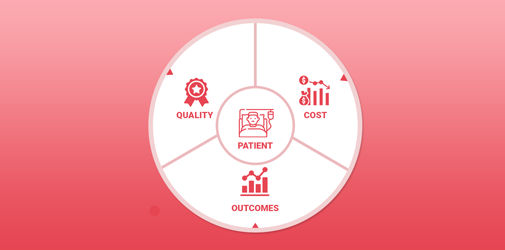
SupplyCopia’s SC-CQOR (Supply Chain Cost, Quality, Outcomes, and Reimbursement) framework ensures that forecasts are evaluated not just on volume, but on impact—cost exposure, quality implications, and financial outcomes.
This shifts AI from a technical exercise into a business tool.
3. AI Augments People Instead of Replacing Them
One of the most effective AI deployments we see is not full automation—it is acceleration.
Ask The BEE, SupplyCopia’s AI agent, allows supply and finance leaders to interact with complex data conversationally:
- “Where are we most exposed to shortages next quarter?”
- “Which suppliers are driving cost volatility?”
- “What happens if demand increases by 15% in this category?”
Instead of analysts spending weeks assembling reports, decision-makers get immediate, explainable insight. This is where AI delivers compounding ROI—by reducing friction between data and decision.
Healthcare’s Unique Constraint: Trust
Unlike retail or manufacturing, healthcare supply chains operate under clinical risk. Decisions influenced by AI affect patient care, therapy availability, and clinician trust.
That means AI must be:
- Transparent
- Explainable
- Consistent
- Defensible
Black-box forecasting models erode confidence. Tools that allow leaders to understand why a forecast exists—and what assumptions drive it—are far more likely to be adopted.
SupplyCopia’s approach emphasizes clarity over novelty. AI supports judgment; it does not replace it.
The Shift from Pilots to Platforms
The organizations seeing sustained ROI are no longer running isolated AI pilots. They are building forecasting platforms—systems where AI, analytics, and human decision-making operate together.
This shift reflects a broader realization:
AI is not a feature. It is an operating model.
When forecasting is embedded into daily workflows, supported by trusted data, and tied to financial outcomes, it stops being experimental and starts becoming indispensable.
Closing Perspective
Healthcare supply chains do not need more AI pilots. They need fewer pilots and stronger foundations.
The future belongs to organizations that:
- Treat forecasting as a strategic function, not a side project
- Align AI with real decisions and real accountability
- Use intelligence to reduce risk, not just generate insight
At SupplyCopia, we build AI where it belongs—inside the decisions that protect margins, ensure availability, and support patient care.
That is where ROI actually exists.
More from SupplyCopia